- Home >
- Our Ideas

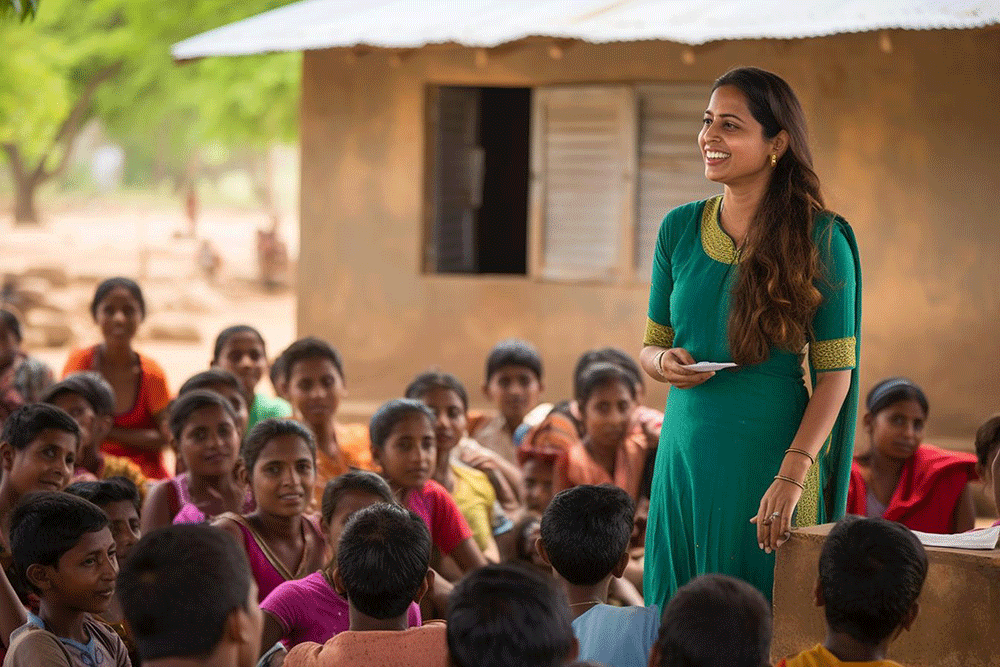
Walk into any classroom, and you’ll notice something subtle but powerful. Two schools may have the same infrastructure-smart boards, digital labs, even identical curricula. Yet, the learning experience feels completely different. The difference isn’t the building but the teacher.
And yet, much of Corporate social responsibility in education has historically focused on what can be seen: classrooms, devices, and scholarships. What often gets overlooked is the one factor that determines whether any of this works- the teacher.
For years, CSR education initiatives have leaned toward infrastructure-heavy investments. But there’s a growing realisation that, without trained educators, even the best resources remain underutilised. A smart classroom without a confident teacher is, quite simply, expensive furniture.
This is where CSR for teacher training is beginning to reshape the conversation. Instead of asking “What can we provide schools?”, the more meaningful question is “What can teachers do with what they already have?”
Because if students are the outcome, teachers are the multiplier.
There’s a tendency to equate training with transformation. A workshop here, a seminar there, and the box is checked. But true teacher capacity building, CSR goes much deeper.
It is not an event. It is a process.
Effective teacher development programs in India are built on continuity. They include mentoring, not just modules. They create spaces for peer learning, not just one-way instruction. They introduce digital teaching skills training, but also ensure teachers feel confident applying those skills in real classrooms.
Strong education capacity building programs recognise that teachers don’t just need tools-they need time, support, and trust to adapt. This is where CSR in skill development for teachers becomes meaningful, when it shifts from delivering content to enabling change.
The Implementation Reality We Don’t Talk About Enough
If teacher training is so important, why doesn’t it always work?
The answer lies in execution. Many school education improvement initiatives invest in training, but fail to follow through. There is little classroom integration, limited feedback, and often a mismatch between training content and ground realities.
These are the real challenges in implementing teacher training under CSR. A program designed in an urban boardroom may not translate effectively into a rural classroom. Teachers, already managing heavy workloads, are expected to adopt new methods without ongoing support.
This is why teacher training is important in CSR.Education projects cannot be separated from how it is implemented. Training alone doesn’t transform education but consistent engagement does.
A teacher does not operate in isolation. Their effectiveness is shaped by the ecosystem around them-school leadership, community involvement, and policy alignment.
The most impactful examples of CSR initiatives for teacher training programs take this into account. They combine teacher training with leadership development, community engagement, and systemic support.
This is where we begin to see how CSR can improve teacher capacity building in India in a sustainable way, not by focusing on individuals alone, but by strengthening the environment in which they work.
There’s an untapped opportunity here. Teachers are not just implementers of curriculum-they are potential innovators. With the right support, they can adapt technology, contextualise learning, and bridge the gap between policy and practice.
The real impact of teacher capacity building on student learning outcomes is not immediate but profound. It shows up in confidence, curiosity, and critical thinking-qualities that no device alone can deliver.
The future of Corporate social responsibility in education depends on a shift in mindset. From infrastructure to capability and from visibility to value.
Because the most powerful investment CSR can make is not in what schools have, but in what teachers can do. And when teachers grow, classrooms don’t just function better,they come alive.


