- Home >
- Our Ideas

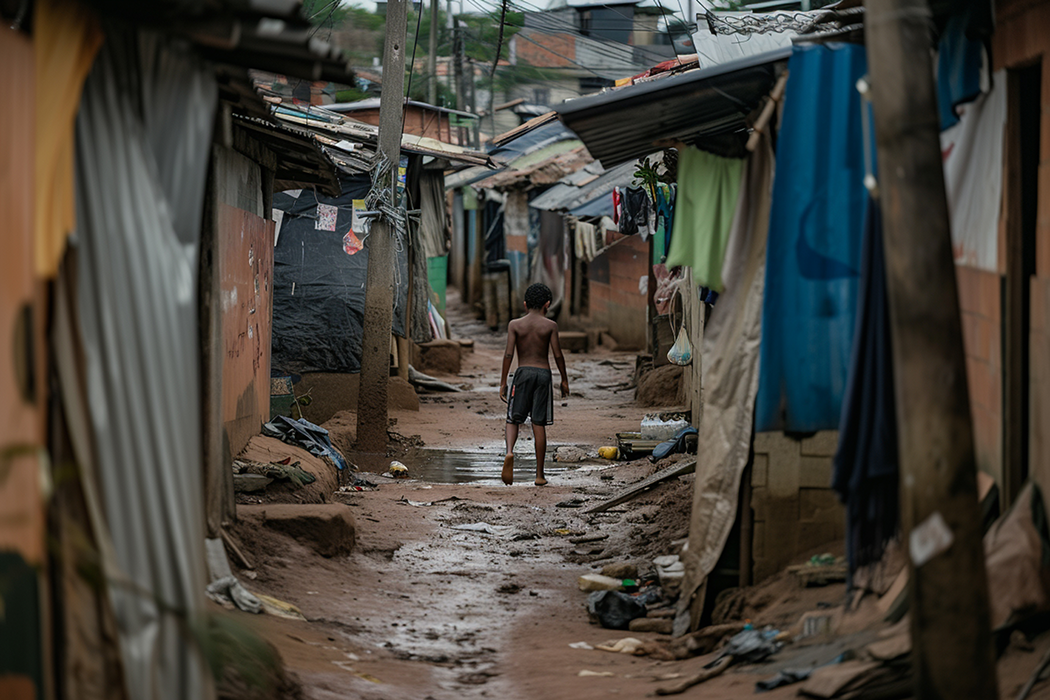
India’s rapid urbanisation has transformed cities into major centres of economic growth and opportunity. However, this growth has also intensified urban poverty in India, with the expansion of informal settlements highlighting persistent gaps in housing, livelihoods, healthcare, education, and access to essential services.
Addressing these challenges requires more than short-term charity or isolated infrastructure projects. Sustainable slum development in India demands integrated, systems-based solutions that strengthen communities while connecting them to broader urban development frameworks. Strategic CSR for urban development can play a critical role in advancing inclusive and resilient cities.
Urban poverty is multidimensional and extends beyond housing. Communities living in informal settlements often face overlapping challenges that affect their economic stability and quality of life.
Key dimensions of urban poverty in India include informal livelihoods and unstable incomes, limited access to healthcare and education, lack of social security and documentation, insecure housing tenure and eviction risks, as well as gender vulnerabilities and youth unemployment. These issues reinforce cycles of exclusion and limit access to opportunities within rapidly growing urban economies.
Effective urban slum development programs must therefore address these interconnected challenges through integrated urban community development initiatives that support livelihoods, health, education, and governance.
Many CSR initiatives in urban settings focus primarily on visible infrastructure, such as building facilities or organising one-time service camps. While these interventions can provide immediate relief, they often fail to address systemic issues that drive urban poverty.
Common limitations include one-time infrastructure projects without sustainable maintenance mechanisms, skill training programs disconnected from actual job markets, health camps without follow-up care, and limited coordination with municipal bodies or city-level development plans.
As a result, several CSR initiatives for slum communities generate short-term outputs but limited long-term impact. Strengthening corporate social responsibility in urban communities requires approaches that align with city systems, local governance structures, and long-term development priorities.
To achieve sustainable impact, CSR strategies must evolve from isolated projects to integrated development models. This requires shifting from charity-driven approaches to systems strengthening, from infrastructure-focused initiatives to sustainable service delivery models, and from beneficiary-based programs to community-owned solutions.
Integrated interventions that connect communities to city systems support sustainable urban development in India and enable scalable CSR models for urban poverty alleviation.
Corporate initiatives can play an important role in strengthening urban livelihood programs in India while addressing multiple development challenges.
One of the most effective approaches is integrating livelihoods with urban economies. CSR programs can support skill development aligned with city demand across sectors such as construction, logistics, retail, and services. Promoting micro-enterprises and strengthening market linkages for informal workers can also enhance income stability and economic mobility.
Strengthening local governance is another critical component of successful urban community development initiatives. Partnerships with municipal bodies, participatory planning processes, and community data mapping can help ensure that CSR programs align with city development strategies. Such collaboration highlights the growing role of corporates in urban community development.
Additionally, comprehensive urban slum development programs should integrate health and education support to improve long-term outcomes. Initiatives such as strengthening access to primary healthcare, supporting community health workers, and providing after-school education programs can significantly improve community resilience.
For CSR initiatives to deliver meaningful impact, organisations must adopt structured program design frameworks aligned with CSR models for urban poverty alleviation.
Effective programs typically begin with baseline vulnerability assessments to understand community needs and development gaps. Aligning CSR interventions with city development plans and government schemes can improve program sustainability and avoid duplication of efforts. Multi-stakeholder partnerships with local authorities, NGOs, and community leaders further strengthen implementation.
Long-term investments and multi-year program cycles are also essential for addressing the complex nature of urban poverty in India. Outcome-based monitoring systems that track indicators such as improvements in livelihoods, healthcare access, and education outcomes help ensure that initiatives generate measurable impact.
With India’s urban population continuing to grow, the need for inclusive and sustainable development strategies is more important than ever. Corporates have a unique opportunity to address urban poverty in India by supporting innovative and integrated development models.
At SoulAce, we believe that strengthening corporate social responsibility in urban communities requires a shift towards ecosystem-based interventions that connect livelihoods, services, and governance systems. Rethinking slum development in India through collaborative CSR initiatives can transform urban communities and ensure that the benefits of urban growth reach the most vulnerable populations.


