- Home >
- Our Ideas

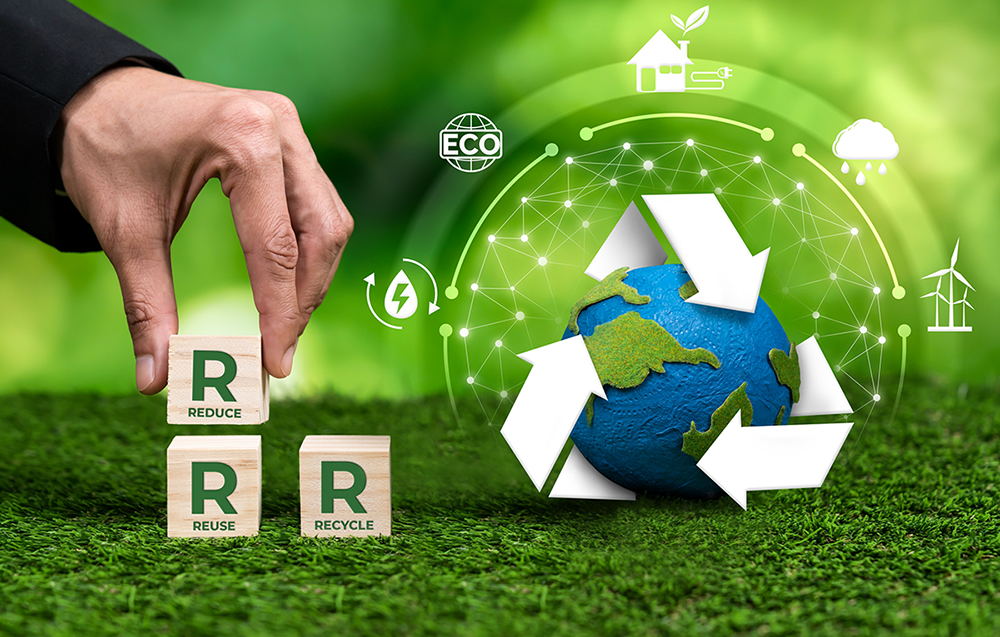
Packaging waste from consumer goods is a major contributor to plastic pollution and overflowing landfills, creating urgent environmental challenges. As consumers increasingly demand eco-friendly products, companies are under pressure to rethink their CSR strategies, prompting a shift in the consumer goods sector from compliance-driven initiatives to proactive environmental leadership. By adopting circular economy principles, businesses can redesign packaging to minimize waste, retain material value, and deliver sustainable packaging solutions that reduce environmental impact while strengthening brand reputation and consumer trust.
Innovative recycling, upcycling, and take-back programs transform packaging waste into opportunity and business advantage, ensuring that CSR and the circular economy become central to a forward-looking consumer goods strategy focused on sustainability.
Circular economy is a system designed to keep products and materials in use for as long as possible while reducing packaging waste and regenerating natural systems (Recycle Track Systems). Unlike the traditional “take-make-dispose” model, the circular economy represents a fundamental shift in corporate responsibility, changing how products are designed, used, and recovered.
In the context of packaging, this approach underscores the role of CSR in circular economy initiatives, promoting the use of recyclable, reusable, and compostable materials that can be reintegrated into production cycles, minimizing environmental impact and creating long-term value.
Waste Reduction:
Circular models directly support packaging waste reduction, especially for single-use plastics.
Regulatory Pressure:
Extended Producer Responsibility frameworks reinforce corporate responsibility in packaging and push companies toward circular models.
Consumer Demand:
Consumers increasingly expect sustainable consumer goods supported by credible CSR action.
Brand Value and Competitive Advantage:
Embedding CSR and circular economy principles strengthens trust and long-term brand value.
CSR acts as a catalyst for circular economy in packaging through practical interventions. Many leaders in the FMCG sector are embracing sustainable packaging solutions by reducing virgin plastic and increasing recycled content, demonstrating clear examples of CSR initiatives aimed at minimising packaging waste. Alongside this, eco-design and product innovation which focus on designing packaging for reuse and recyclability—reflect best practices in both sustainable packaging and corporate social responsibility. Companies are also implementing take-back and refill programs, showcasing how circular packaging models can be adopted at scale to engage consumers in sustainability efforts. Furthermore, closed-loop systems and recycling partnerships enable businesses to collaborate with recyclers, strengthening CSR strategies while advancing circular economy outcomes and reducing the environmental footprint of consumer goods.
Globally, members of the Consumer Goods Forum are collaborating to accelerate circular packaging commitments and strengthen Extended Producer Responsibility (EPR) implementation. In India, companies work closely with leading brands to enable post-consumer plastic recycling and support EPR compliance. At the grassroots level, initiatives like plastic weaving highlight how upcycling can reduce plastic waste while generating inclusive livelihood opportunities.
Effective CSR strategies for circular packaging include setting clear circular targets, partnering across value chains, engaging consumers through education and incentives, measuring impact through KPIs such as recycling rates and carbon reduction, and investing in innovation for advanced or biodegradable materials.These actions define the role of CSR in circular economy packaging and support sustainable packaging and CSR best practices.
SoulAce leverages impact-measurement frameworks to align CSR and circular economy goals with circular outcomes, enabling packaging waste reduction.
Higher material costs, weak recycling infrastructure, and gaps in consumer awareness continue to challenge corporate responsibility in packaging, limiting the scale and impact of sustainable initiatives. Addressing these barriers is critical to expanding sustainable packaging solutions across consumer goods markets.
As expectations from regulators, consumers, and investors rise, CSR and circular economy principles are becoming central to modern CSR in consumer goods. By integrating circular economy approaches in packaging with responsible business practices, companies can accelerate packaging waste reduction, enhance brand value, and contribute meaningfully to long-term sustainable packaging and CSR best practices.


