- Home >
- Our Ideas

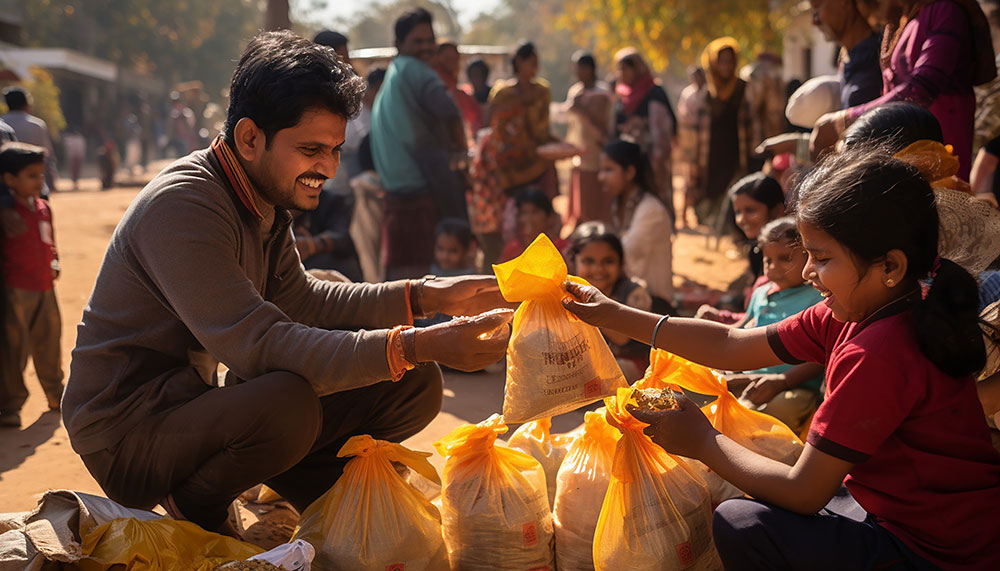
Employee volunteering has become a critical component of Corporate Social Responsibility (CSR) and Environmental, Social, and Governance (ESG) strategies. As organisations move beyond compliance-driven CSR, high-impact employee volunteering programmes are emerging as a powerful way to deliver measurable social impact while strengthening employee engagement and organisational culture.
However, not all volunteering initiatives create meaningful outcomes. The difference lies in how employee volunteering programmes are designed, implemented, and measured.
The foundation of a successful employee volunteering programme is alignment with an organisation’s CSR focus areas and ESG priorities. Whether the focus is education, water stewardship, climate action, livelihoods, or inclusion, volunteering initiatives should directly support long-term sustainability goals.
Purpose-led volunteering programmes receive stronger leadership buy-in, higher employee participation, and deliver outcomes that can be credibly reported under ESG and BRSR frameworks.
The following strategies illustrate how organisations can achieve this:
Many organisations still rely on one-day volunteering events that offer limited long-term impact. While such activities create visibility, long-term employee volunteering programmes create real change.
Designing volunteering journeys over several months allows employees to build deeper engagement with communities and enables organisations to track outcomes more effectively. Long-term programmes also strengthen community trust and programme sustainability.
Skill-based volunteering is one of the most effective ways to maximise impact. Employees contribute professional skills such as finance, HR, IT, marketing, data analysis, and project management to strengthen NGO capacity and community systems.
Skill-based employee volunteering creates shared value, delivering high-quality support to communities while enhancing employee learning, leadership, and job satisfaction.
High-impact employee volunteering depends on credible partnerships. NGOs bring domain expertise, community relationships, and implementation experience, while corporates bring scale, skills, and resources.
Co-creating volunteering programmes with NGO partners ensures ethical engagement, realistic expectations, and meaningful outcomes aligned with community needs.
A successful employee volunteering programme is inclusive by design. Offering a mix of on-ground, virtual, team-based, and individual volunteering opportunities ensures participation across geographies, roles, and employee capacities.
Flexibility increases employee participation while enabling organisations to scale volunteering initiatives across locations.
Impact measurement is essential for credible CSR and ESG reporting. Organisations should track both social impact indicators and employee engagement metrics, moving beyond participation numbers alone.
Clear measurement frameworks strengthen transparency, enable continuous improvement, and support ESG disclosures and sustainability reporting.
Leadership involvement plays a key role in embedding employee volunteering into organisational culture. When leaders actively participate and champion volunteering initiatives, employees are more likely to engage meaningfully.
Recognition, storytelling, and internal communication further reinforce a culture of purpose and shared responsibility.
At SoulAce, employee volunteering is designed as a strategic extension of CSR and ESG commitments. SoulAce partners with organisations to build structured, outcome-driven employee volunteering programmes aligned with business priorities, regulatory requirements, and community needs—ensuring measurable impact for both organisations and society.
As ESG expectations continue to evolve, employee volunteering will play a central role in responsible business practices. The future lies in programmes that are strategic, inclusive, and impact-focused—where employees are active contributors to sustainable development.
When designed well, employee volunteering is not just a CSR activity—it is a driver of long-term social impact, employee engagement, and ESG success.
To know more write to anirudhya@soulace.in


