- Home >
- Our Ideas

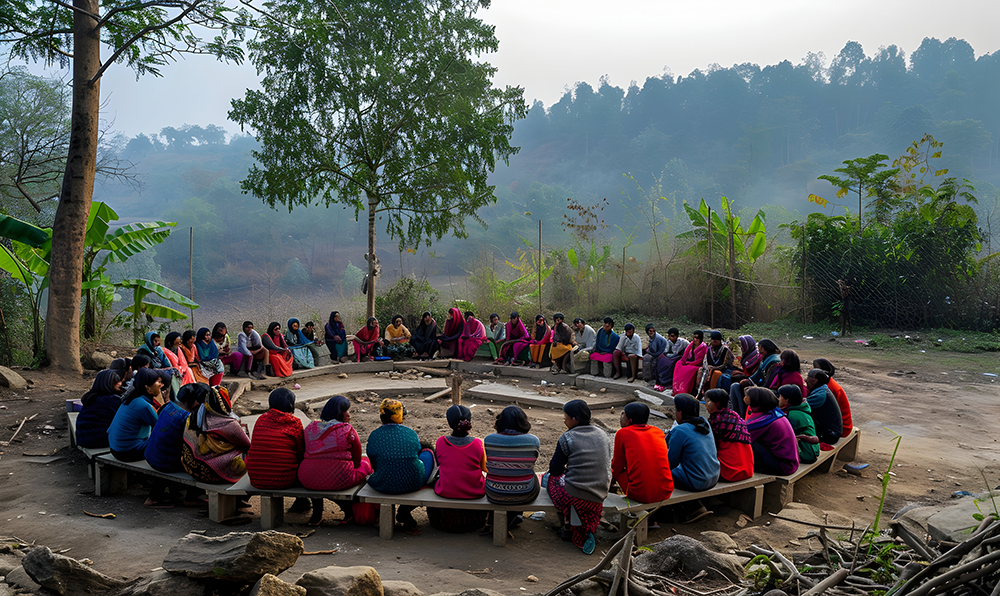
India is home to the world’s second-largest tribal population. Indigenous and tribal communities have long protected forests, natural resources, and cultural heritage. Yet, despite their critical role in sustaining ecosystems, these communities have disproportionately borne the costs of industrialisation. Mining, infrastructure development, and commercial expansion have often led to displacement, loss of livelihoods, and social disruption.
Today, Corporate Social Responsibility (CSR) has the potential to play a transformative role in tribal community empowerment, enabling inclusive development that restores dignity, opportunity, and long-term resilience.
Tribal communities largely reside in mineral-rich and forested regions, placing them at the centre of India’s economic growth story. However, development has frequently progressed without adequate safeguards for tribal rights and wellbeing. Persistent gaps remain in education, healthcare, digital access, nutrition, and livelihood opportunities across tribal regions.
Insights from national development platforms highlight the urgent need for CSR initiatives for tribal development that go beyond compliance and focus on sustainable, community-led impact. When designed thoughtfully, CSR can bridge structural inequalities while respecting Indigenous knowledge systems and cultural identity.
Historically, many CSR initiatives for tribal welfare have been short-term or transactional. Displacement has often been accompanied by inadequate rehabilitation, limited livelihood restoration, and weak access to essential services. While intent exists across corporate India, true Indigenous community empowerment requires sustained engagement, cultural sensitivity, and long-term investment rather than one-time interventions.
This shift from obligation-driven CSR to impact-driven CSR is essential for creating meaningful outcomes.
To drive lasting impact, organisations must adopt a holistic and humane approach to CSR for tribal communities:
Secure Land Rights and Fair Compensation
Transparent land acquisition, legal safeguards, and fair compensation are foundational to supporting displaced tribal families. CSR can play a critical role in enabling long-term security and social justice.
Rehabilitation and Livelihood Restoration
Beyond compensation, displaced families need sustainable livelihood opportunities. Market-linked skills, forest-produce enterprises, and income-generation models are vital to rebuilding economic stability.
Education and Digital Inclusion
CSR funding for tribal education can bridge learning gaps through school infrastructure, digital learning tools, scholarships, and teacher support. Digital inclusion empowers tribal youth to access information, employment, and services.
Environmental Protection and Community Health
Responsible resource use, forest restoration, water conservation, and healthcare access help minimise environmental harm and protect community wellbeing, strengthening the role of corporations in reducing tribal displacement impacts.
Skill Development and Capacity Building
Skill development for tribal youth, entrepreneurship training, and local institution strengthening enable long-term growth and self-reliance.
These strategies represent best practices in CSR for tribal development, combining economic, social, and environmental sustainability.
Across India, several CSR initiatives demonstrate how community-led approaches can succeed. Projects supporting non-timber forest produce enterprises, local governance structures, women-led collectives, and education models have delivered measurable outcomes. These examples highlight the importance of CSR impact assessment in tribal areas, strong partnerships, and sustained engagement.
For India to achieve equitable and inclusive growth, tribal communities must be recognised as active partners in development not passive recipients of aid. CSR initiatives focused on Indigenous and tribal communities offer a powerful pathway to address historical inequities while fostering resilient, self-sustaining futures.
By adopting humane, inclusive, and impact-driven CSR strategies, organisations can create shared value for businesses, communities, and the nation at large. By placing dignity, participation, and accountability at the core of CSR, organisations can help ensure that India’s growth story includes its tribal communities—leaving no one behind.


